Flat Print or 3D Customization: What's the Difference for Branded Rubber Ducks?
When a client asks me whether they should go with flat printing or full 3D customization for their custom rubber ducks, I always start with the same simple explanation: it comes down to how the design is applied and how much detail you want the duck to carry. Flat printing is exactly what it sounds like—we print the artwork directly onto the surface of the duck. That could be a shirt, a logo, or small decorative details. It's the more budget-friendly route and works well for projects with limited spend. But if you want the duck to wear a actual three-dimensional outfit, sport sunglasses, or have other raised accessories, then we need to talk about a custom mold. That approach gives you a much more sculpted, true-to-design result. So which one should you pick? It really depends on your budget and how particular you are about the product details.
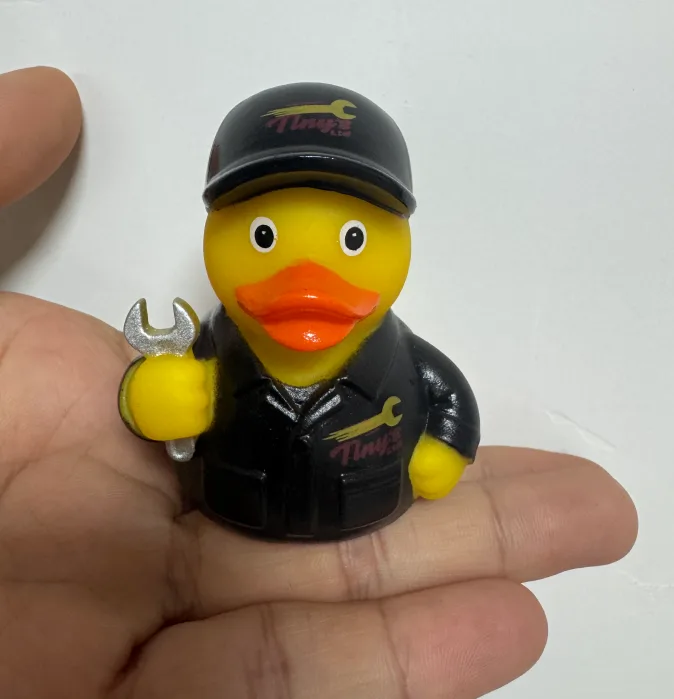
Why flat printing is often the practical first choice
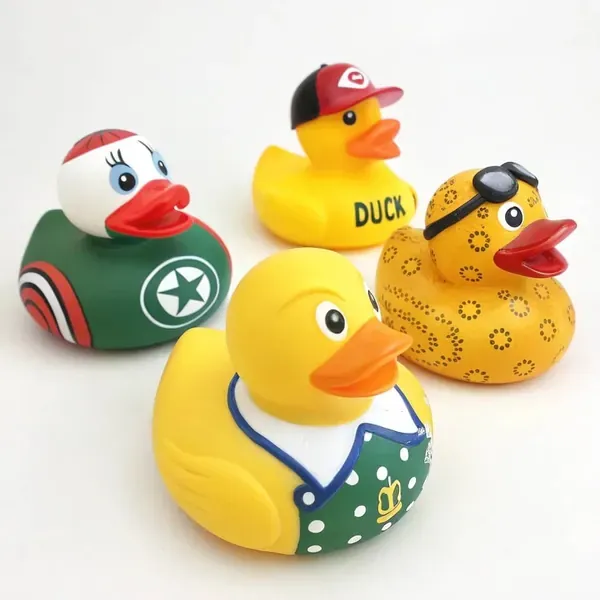
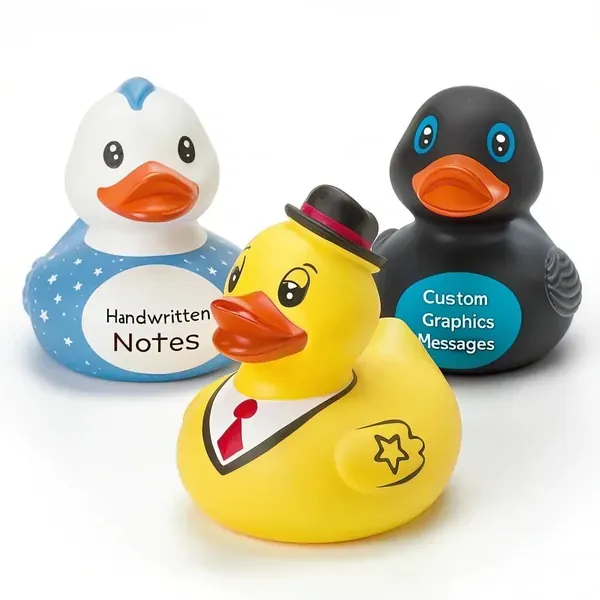
Most of the branded rubber ducks we produce start with flat printing. It's straightforward: we take your logo, your mascot, or a simple pattern and print it right on the duck's body. Because there's no new mold required, the cost stays lower and turnaround is simpler. For promotional rubber ducks, custom rubber ducks with logo, or bulk orders where the goal is brand visibility rather than a highly detailed collectible, flat printing delivers exactly what you need. You still get a personalized rubber duck that carries your brand, just without the extra sculptural elements.
I often recommend flat printing when the design is mostly two-dimensional—think a company logo on the chest, a small graphic on the wing, or text across the side. It keeps the duck recognizable as your branded rubber duck without overcomplicating production.
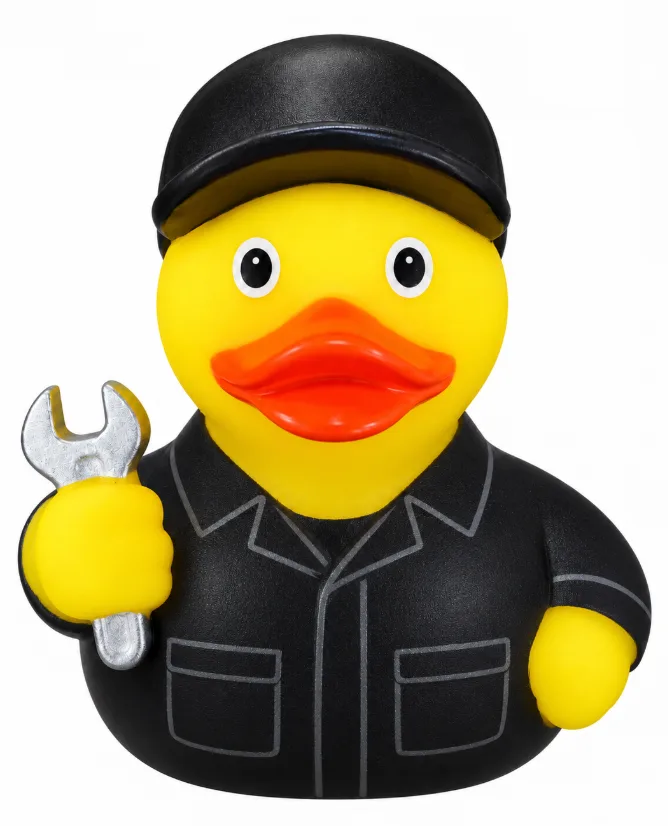
When 3D customization is worth the investment
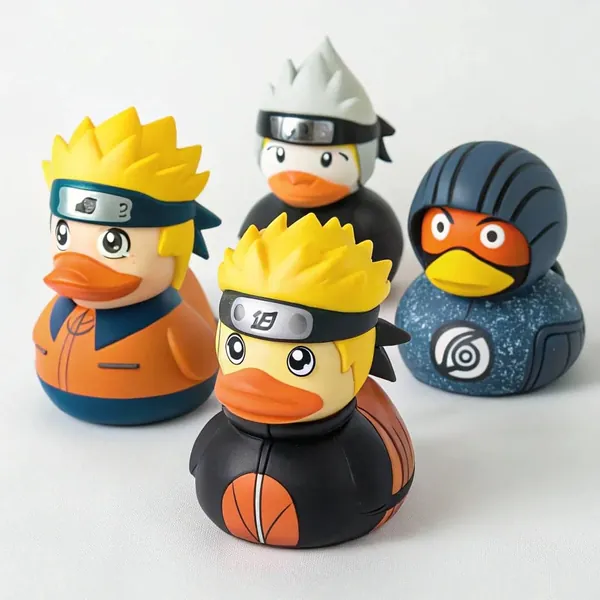
On the other hand, some projects call for more than a printed surface. If your concept involves the duck wearing a tiny shirt, a hat, sunglasses, or holding a small accessory, flat printing can't achieve that look. That's when we move to a custom mold. A 3D custom rubber duck is sculpted to include those elements as part of the duck itself, so the final product feels more like a miniature figure than a standard duck with a sticker.
From my experience, this route makes sense when the duck is meant to be a keepsake, a premium giveaway, or a centerpiece for a campaign where the design detail is the whole point. It's also common for custom jeep ducks or collector-style ducks where the shape and accessories matter as much as the logo. The trade-off is cost and lead time—custom molds require more setup—but the result is a duck that looks exactly like the design you approved.
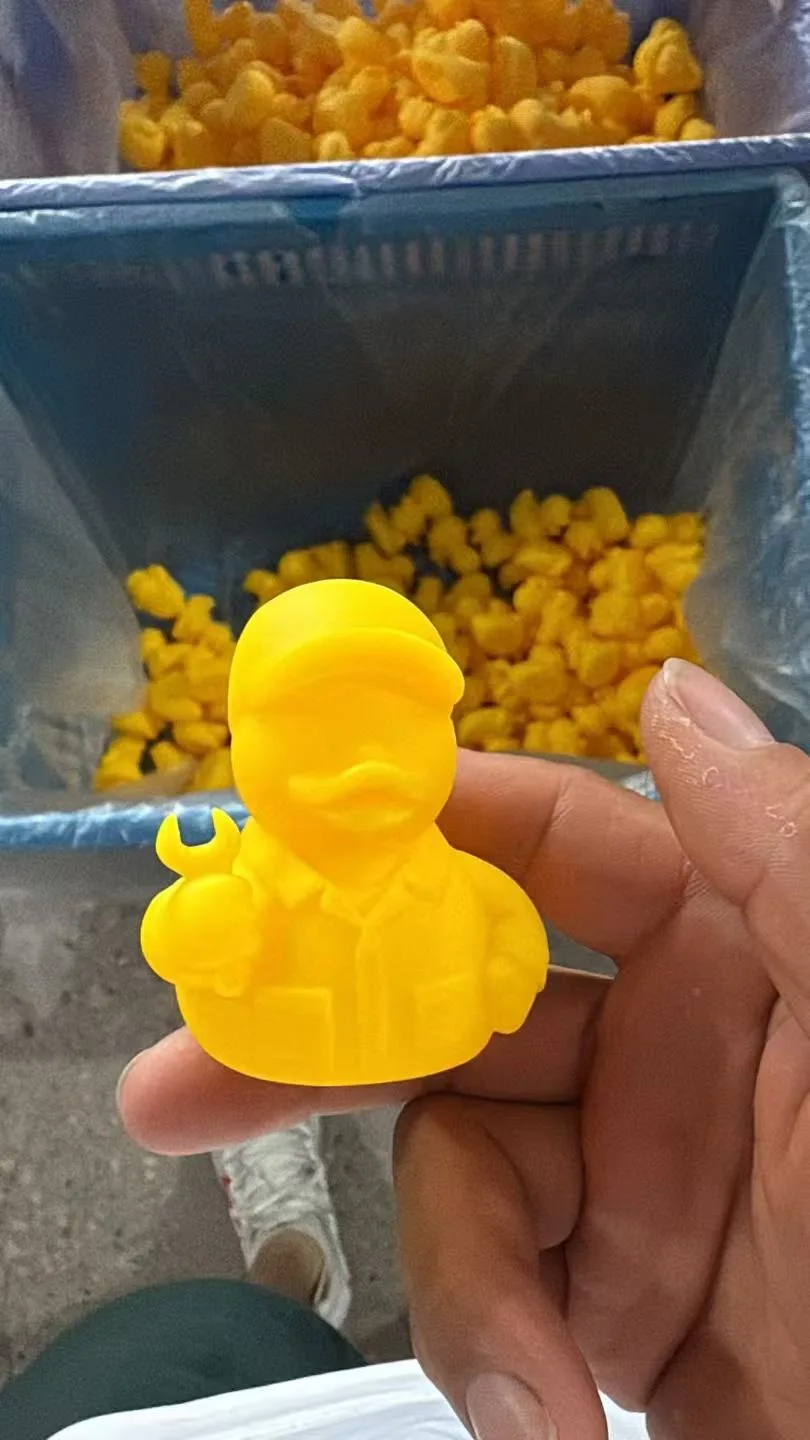
How to decide: budget and detail requirements
So how do you choose between flat printing and 3D customization? I usually ask two questions: what's your budget per duck, and how important are the small details?
If you're ordering custom rubber ducks in bulk for a giveaway, flat printing is usually the smart choice. It keeps costs down and still gives you a branded rubber duck that people will use. If you're creating a personalized rubber duck for a special edition, a VIP gift, or a product that needs to stand out on a shelf, then investing in a custom mold for 3D details is often worth it.
It's also worth noting that you can combine approaches—flat printing for the logo and 3D molding for one or two key features. But that's a conversation best had with your custom rubber duck supplier once they understand your design and quantities.
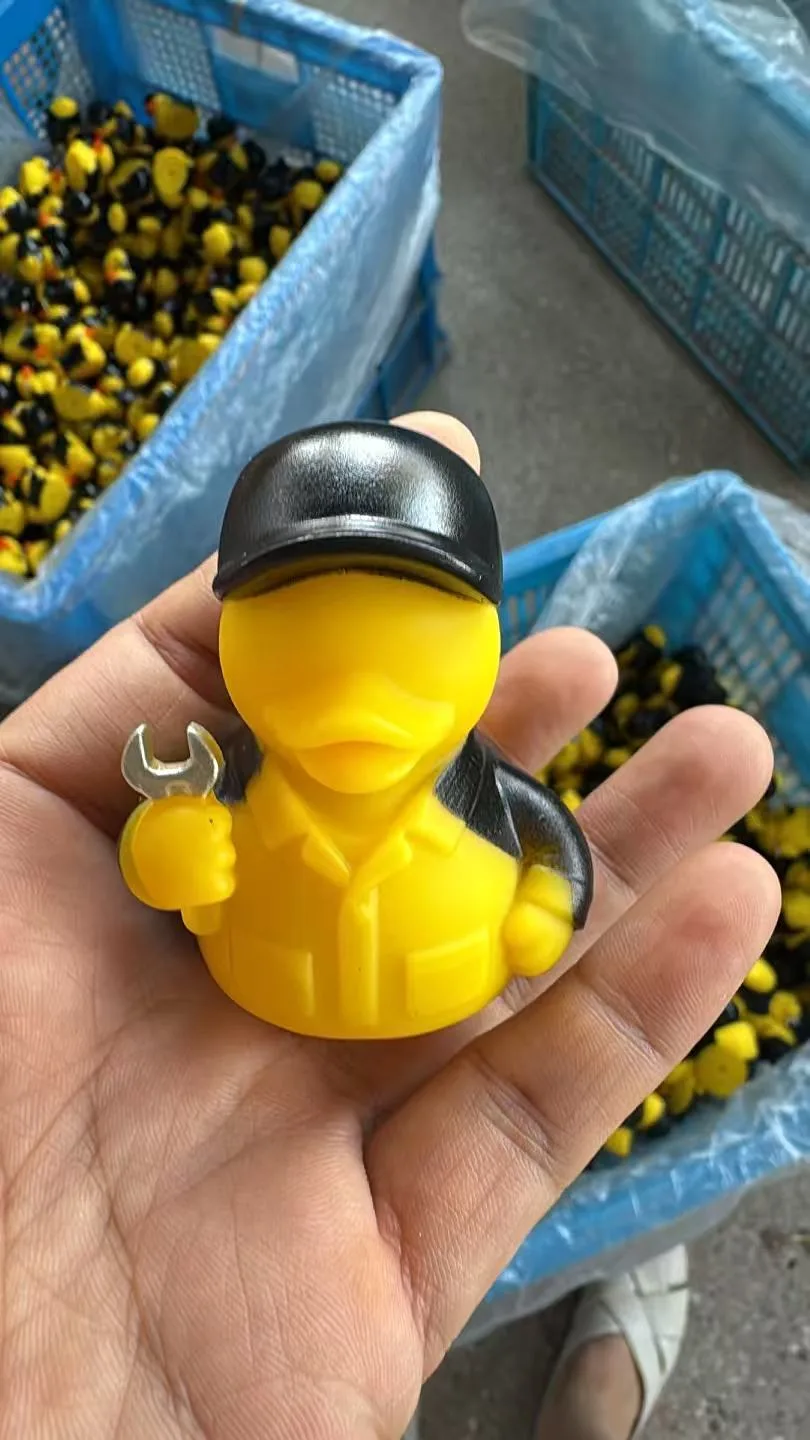
What I tell clients who are still unsure
If you're on the fence, start by sketching your design and asking yourself: can this be achieved with a printed graphic, or does it need to be physically sculpted? If it's the former, flat printing will save you money and time. If it's the latter, a custom mold is the only way to get the 3D effect. Either way, the goal is a custom rubber duck that represents your brand well—and both methods can do that, as long as they match your budget and detail expectations.
So when you're choosing between flat printing and 3D customization for your branded rubber ducks, first look at your budget, then look at how much detail your design requires. That's the simplest way to decide.